
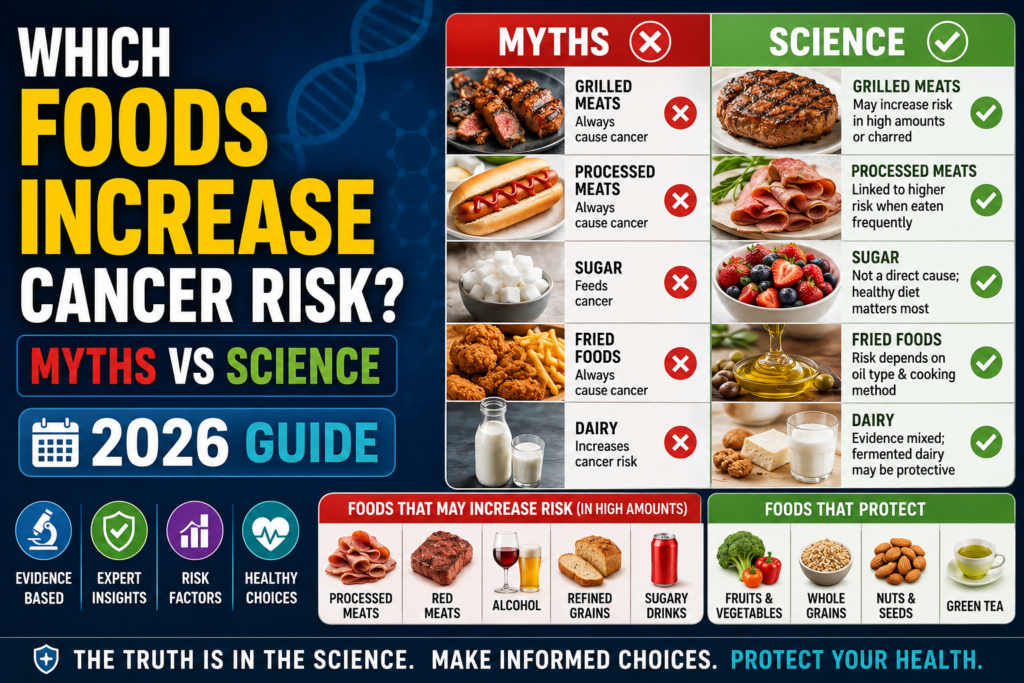
Which Foods Increase Cancer Risk? Myths vs Science
Introduction
Can what you eat really increase your risk of cancer? With so much information online, it’s easy to get confused between myths and scientifically proven facts. While no single food directly “causes” cancer, research from 2024–2026 clearly shows that certain dietary patterns can significantly increase cancer risk over time.
In fact, studies suggest that up to 30–40% of cancers are linked to lifestyle and diet. From processed meats to sugary foods, some eating habits can promote inflammation, obesity, and hormonal imbalances—all of which contribute to cancer development.
In this article, we break down the truth behind foods that increase cancer risk, separating myths from science, and helping you make smarter dietary choices.
What Does Science Say About Diet and Cancer?
Cancer development is influenced by multiple factors, including genetics, environment, and lifestyle. Diet plays a major role by affecting body weight, hormone levels, inflammation, and gut health.
Certain foods are classified as carcinogenic or potentially cancer-promoting based on strong scientific evidence. However, risk depends on quantity, frequency, and overall lifestyle.
Foods That Increase Cancer Risk (Science-Based)
Processed Meats
Processed meats such as sausages, bacon, and salami are classified as Group 1 carcinogens by global health authorities.
They contain preservatives like nitrates and nitrites, which can form cancer-causing compounds in the body. Regular consumption is strongly linked to colorectal cancer.
Red Meat (Excess Consumption)
High intake of red meat such as beef, pork, and lamb may increase cancer risk, especially colorectal cancer.
Cooking at high temperatures can produce harmful chemicals that damage DNA.
Moderation is key rather than complete avoidance.
Ultra-Processed Foods
Foods like packaged snacks, instant noodles, chips, and fast food fall into this category.
They are high in unhealthy fats, sugar, salt, and additives. These foods contribute to obesity and chronic inflammation, both major cancer risk factors.
Sugary Foods and Drinks
Excess sugar does not directly cause cancer but contributes to obesity, insulin resistance, and inflammation.
High consumption of sugary beverages is linked to increased risk of several cancers.
Alcohol
Alcohol is one of the most well-established dietary risk factors for cancer.
It is linked to cancers of the liver, breast, mouth, throat, and esophagus.
Even moderate consumption increases risk.
Deep-Fried and Burnt Foods
Cooking foods at very high temperatures, especially frying or grilling, can produce harmful compounds such as acrylamide and heterocyclic amines.
These chemicals are associated with increased cancer risk when consumed frequently.
Refined Carbohydrates
White bread, pastries, and refined flour products cause rapid spikes in blood sugar and insulin.
Long-term consumption contributes to metabolic disorders and increased cancer risk.
Myths vs Facts About Cancer-Causing Foods
Myth: Sugar directly feeds cancer and should be completely eliminated.
Fact: All cells, including healthy ones, use glucose. The real issue is excess sugar leading to obesity and metabolic imbalance.
Myth: Microwaved food causes cancer.
Fact: Microwave cooking is safe when used properly and does not make food carcinogenic.
Myth: Organic food completely prevents cancer.
Fact: Organic food may reduce exposure to pesticides but does not guarantee cancer prevention.
Myth: Only junk food causes cancer.
Fact: Cancer risk depends on overall diet, lifestyle, and genetic factors.
How Diet Influences Cancer Risk
Diet affects cancer risk through several mechanisms.
It can increase or reduce inflammation in the body. Chronic inflammation promotes tumor growth.
It influences hormone levels, especially insulin and estrogen, which are linked to cancer.
It affects gut microbiome health, which plays a role in immunity and cancer prevention.
It contributes to body weight, and obesity is a major risk factor for multiple cancers.
Foods That Help Reduce Cancer Risk
A balanced diet can protect against cancer.
Include plenty of fruits and vegetables rich in antioxidants.
Whole grains provide fiber that supports gut health.
Nuts and seeds offer healthy fats and anti-inflammatory benefits.
Lean proteins such as fish, eggs, and legumes support overall health.
Green tea and foods rich in polyphenols may have protective effects.
Lifestyle and Diet Tips for Prevention
Focus on a whole-food, balanced diet rather than restricting specific foods completely.
Maintain a healthy weight through regular exercise.
Limit processed and red meat consumption.
Avoid alcohol or keep it minimal.
Stay hydrated and reduce sugary drinks.
Practice mindful eating and portion control.
When to See a Doctor
Consult a doctor if you have digestive issues, unexplained weight loss, or a family history of cancer.
Regular screenings and early detection are important, especially for high-risk individuals.
FAQs
Do certain foods directly cause cancer?
No single food directly causes cancer, but dietary patterns can increase or decrease risk.
Is it okay to eat red meat?
Yes, in moderation. Limit intake and avoid overcooking.
Does sugar need to be completely avoided?
No, but excess sugar should be reduced to maintain overall health.
Can diet alone prevent cancer?
Diet plays a major role, but other factors like genetics and environment also matter.
Conclusion
Understanding which foods increase cancer risk helps you make informed and healthier choices. While no food alone causes cancer, a diet high in processed foods, red meat, sugar, and alcohol can significantly increase risk over time.
The key is balance, moderation, and focusing on whole, nutrient-rich foods. Combined with a healthy lifestyle, these changes can greatly reduce your cancer risk and improve overall well-being.