
Meta Title: Targeted Therapy in Cancer Treatment Explained
Meta Description: Learn what targeted therapy is, how it works, types, benefits, side effects, and latest advancements in cancer treatment in 2026.
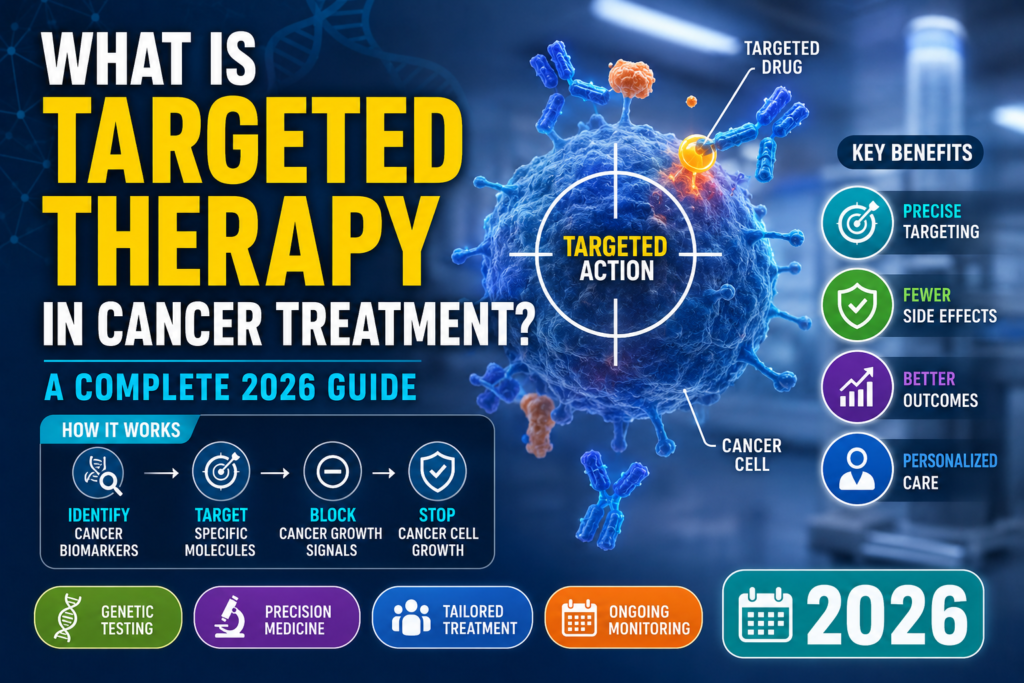
What Is Targeted Therapy in Cancer Treatment?
Introduction
Cancer treatment has evolved significantly over the past decade. While traditional treatments like chemotherapy attack all rapidly dividing cells, modern medicine is shifting toward more precise and personalized approaches. One of the most important breakthroughs is targeted therapy.
But what exactly is targeted therapy, and how is it different from chemotherapy? Can it improve survival rates and reduce side effects?
In 2025–2026, targeted therapy has become a cornerstone of cancer care, offering more effective and less toxic treatment options for many patients. This guide explains everything you need to know about targeted therapy in cancer treatment, including how it works, types, benefits, and latest advancements.
What is Targeted Therapy?
Targeted therapy is a type of cancer treatment that specifically targets molecules or pathways involved in the growth and spread of cancer cells.
Unlike chemotherapy, which affects both cancerous and healthy cells, targeted therapy focuses on specific genetic changes or proteins that drive cancer.
This makes it more precise and often associated with fewer side effects.
How Does Targeted Therapy Work?
Cancer cells grow due to specific mutations or abnormal signaling pathways. Targeted therapy blocks these processes.
It works by identifying and attacking specific targets such as proteins, genes, or blood vessels that support tumor growth.
Some therapies block signals that tell cancer cells to grow, while others cut off the blood supply to tumors or help the immune system recognize cancer cells.
Types of Targeted Therapy
There are several types of targeted therapy used in cancer treatment.
Small molecule inhibitors enter cancer cells and block internal signals that promote growth.
Monoclonal antibodies attach to specific proteins on the surface of cancer cells and block their activity.
Angiogenesis inhibitors prevent tumors from forming new blood vessels, limiting their growth.
Hormone therapies block hormones that fuel certain cancers such as breast and prostate cancer.
Cancers Treated with Targeted Therapy
Targeted therapy is used in many types of cancer, including breast cancer, lung cancer, colorectal cancer, prostate cancer, leukemia, melanoma, and kidney cancer.
It is especially effective in cancers with known genetic mutations.
Diagnosis Before Targeted Therapy
Not all patients are eligible for targeted therapy. Doctors perform specific tests to identify genetic mutations or biomarkers.
These may include genetic testing, biomarker analysis, and tumor profiling.
This approach is part of personalized medicine, where treatment is tailored to each patient.
Latest Advancements in 2025–2026
Targeted therapy continues to evolve rapidly.
Next-generation targeted drugs are more precise and effective with fewer side effects.
Combination therapies using targeted therapy with immunotherapy or chemotherapy are improving outcomes.
AI-driven precision medicine is helping doctors identify the best treatment options faster.
Liquid biopsy is being used to detect mutations and monitor treatment response.
Benefits of Targeted Therapy
Targeted therapy offers several advantages.
It is more precise and focuses on cancer cells while sparing healthy cells.
It has fewer side effects compared to chemotherapy.
It improves treatment outcomes in many cancers.
It supports personalized treatment plans based on genetic profiling.
Side Effects of Targeted Therapy
Although generally milder than chemotherapy, targeted therapy can still cause side effects.
Common side effects include fatigue, skin changes, diarrhea, liver issues, and high blood pressure.
These side effects are usually manageable with proper medical supervision.
Limitations of Targeted Therapy
Targeted therapy is not effective for all cancers.
Cancer cells can develop resistance over time, reducing treatment effectiveness.
It can be expensive and may not be accessible in all healthcare settings.
It requires advanced diagnostic testing before use.
Targeted Therapy vs Chemotherapy
Targeted therapy is more precise and focuses on specific cancer mechanisms, while chemotherapy affects all rapidly dividing cells.
Chemotherapy works faster in shrinking tumors, while targeted therapy offers long-term control with fewer side effects.
In many cases, both treatments are used together for better results.
Lifestyle and Diet During Treatment
Patients should follow a balanced diet rich in protein, fruits, and vegetables.
Hydration and light physical activity help maintain strength.
Avoid processed foods, alcohol, and smoking during treatment.
Proper nutrition supports recovery and improves treatment outcomes.
When to See a Doctor
Consult a specialist if you are diagnosed with cancer or want to explore advanced treatment options.
If you have a family history of cancer or genetic risk, early evaluation is recommended.
Personalized treatment planning is essential for the best results.
Myths vs Facts
A common myth is that targeted therapy can cure all cancers. In reality, it is effective only for cancers with specific targets.
Another myth is that it has no side effects. While milder, side effects still exist and require monitoring.
FAQs
Is targeted therapy better than chemotherapy?
It depends on the cancer type and patient profile. Both have important roles.
How do I know if I am eligible?
Doctors perform genetic and biomarker tests to determine eligibility.
Is targeted therapy expensive?
Yes, it can be costly compared to traditional treatments.
Can it be combined with other treatments?
Yes, it is often used with chemotherapy or immunotherapy.
Conclusion
Targeted therapy represents a major advancement in cancer treatment, offering a more precise and personalized approach. By focusing on specific cancer pathways, it improves outcomes while reducing damage to healthy cells.
While it is not suitable for every patient, it is transforming the way cancer is treated in 2025–2026. The future of oncology lies in combining targeted therapy with other advanced treatments for better survival and quality of life.