
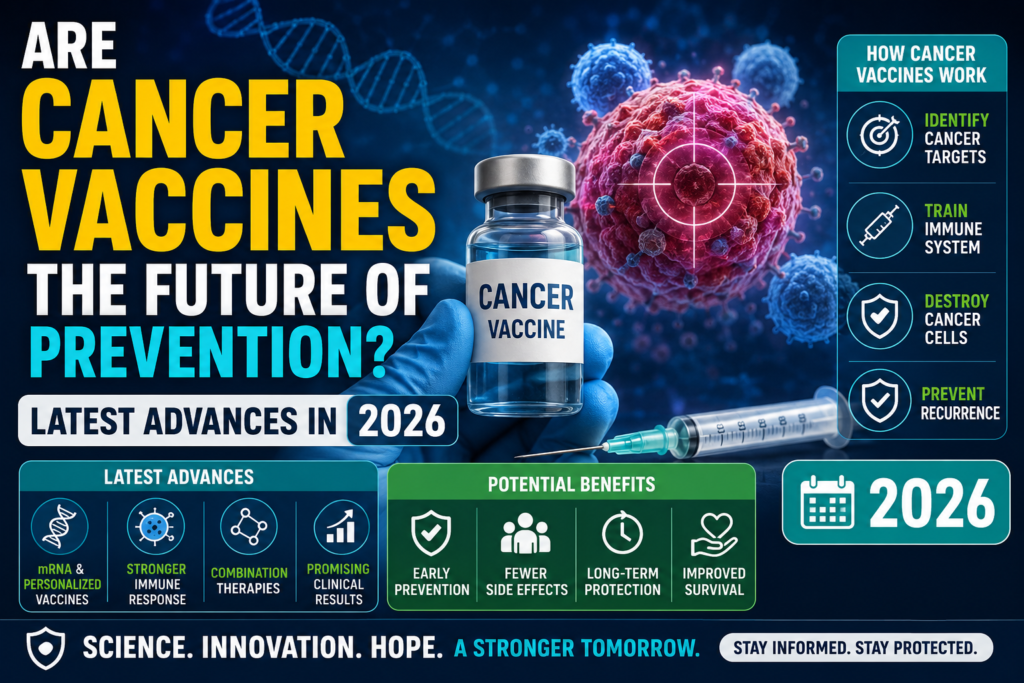
Are Cancer Vaccines the Future of Prevention?
Introduction
Can cancer be prevented with a vaccine just like infections such as measles or COVID-19? This question is at the forefront of modern medical research. With rapid advancements between 2024 and 2026, cancer vaccines are no longer just experimental—they are becoming a promising reality.
Unlike traditional vaccines that prevent infectious diseases, cancer vaccines are designed to either prevent cancer from developing or help the body fight existing cancer more effectively. With breakthroughs in mRNA technology and personalized medicine, scientists are moving closer to making cancer prevention more proactive than ever before.
In this article, we explore whether cancer vaccines truly represent the future of prevention, how they work, and what the latest research says.
What Are Cancer Vaccines?
Cancer vaccines are a type of immunotherapy that trains the body’s immune system to recognize and destroy cancer cells.
They work by targeting specific proteins (antigens) found on cancer cells. Once the immune system learns to identify these markers, it can attack and eliminate cancer cells more efficiently.
There are two main types of cancer vaccines: preventive vaccines and therapeutic vaccines.
Types of Cancer Vaccines
Preventive vaccines are designed to stop cancer from developing in the first place. These are currently the most successful type.
Examples include vaccines that protect against viruses linked to cancer, such as HPV (human papillomavirus), which is associated with cervical and other cancers, and Hepatitis B, which is linked to liver cancer.
Therapeutic vaccines are used in patients who already have cancer. They aim to boost the immune system to fight existing cancer cells and prevent recurrence.
How Do Cancer Vaccines Work?
Cancer vaccines stimulate the immune system by introducing cancer-related antigens into the body.
These antigens trigger an immune response, teaching immune cells to recognize and attack cancer cells that carry the same markers.
Advanced vaccines, especially mRNA-based vaccines, provide instructions to cells to produce these antigens, making the immune response more targeted and effective.
Latest Advancements in 2025–2026
Cancer vaccine research has accelerated significantly in recent years.
mRNA cancer vaccines are one of the biggest breakthroughs. These vaccines can be customized for individual patients based on the genetic profile of their tumor. Early trials in melanoma and pancreatic cancer have shown promising results.
Personalized cancer vaccines are being developed using tumor sequencing. This allows doctors to create vaccines tailored to each patient’s specific cancer mutations.
Combination therapies are also gaining popularity. Cancer vaccines are now being used along with immunotherapy drugs such as checkpoint inhibitors to improve effectiveness.
Clinical trials worldwide are expanding rapidly, with many vaccines showing improved immune response and reduced recurrence rates.
Benefits of Cancer Vaccines
Cancer vaccines offer several advantages.
They provide a targeted approach, reducing damage to healthy cells. They may offer long-term protection by training the immune system to remember cancer cells. They have fewer side effects compared to traditional treatments like chemotherapy. They also play a role in preventing recurrence in certain cancers.
Limitations and Challenges
Despite their promise, cancer vaccines are not yet a complete solution.
Not all cancers have identifiable antigens, making vaccine development difficult. Tumors can evade the immune system, reducing vaccine effectiveness. Development costs are high, and accessibility remains limited. Most therapeutic vaccines are still in clinical trial stages.
Are Cancer Vaccines Effective Today?
Preventive vaccines like HPV and Hepatitis B are already highly effective in reducing cancer risk.
Therapeutic cancer vaccines are still evolving. While results are promising, they are not yet widely used as a standard treatment for all cancers.
However, ongoing research suggests that cancer vaccines will play a major role in the future of oncology.
Role in Cancer Prevention
Cancer vaccines have the potential to shift healthcare from treatment to prevention.
By targeting risk factors such as viruses and genetic mutations, vaccines can significantly reduce the incidence of certain cancers.
In the future, routine vaccination programs may include cancer-preventive vaccines, especially for high-risk individuals.
Lifestyle Still Matters
Even with vaccines, lifestyle plays a crucial role in cancer prevention.
Maintaining a healthy diet, avoiding tobacco, limiting alcohol, staying physically active, and managing stress are essential.
Vaccines are an addition to prevention—not a replacement for healthy living.
When to Consider Cancer Vaccines
You should discuss cancer vaccines with a doctor if you are eligible for HPV or Hepatitis B vaccination, have a family history of cancer, or are exploring advanced treatment options.
Early consultation helps in understanding eligibility and benefits.
Myths vs Facts
A common myth is that cancer vaccines can prevent all cancers. In reality, they currently prevent only specific types linked to infections or certain mutations.
Another myth is that they replace traditional treatments. In fact, they are often used alongside other therapies.
FAQs
Can cancer vaccines prevent cancer completely? Not all cancers, but they can significantly reduce risk in certain cases.
Are cancer vaccines available in India? Preventive vaccines are widely available, while therapeutic vaccines are limited to specialized centers and trials.
Are they safe? Yes, most cancer vaccines have shown good safety profiles in studies.
Will cancer vaccines replace chemotherapy? Not entirely, but they may reduce the need for aggressive treatments in the future.
Conclusion
Cancer vaccines represent one of the most exciting advancements in modern medicine. While preventive vaccines are already saving lives, therapeutic cancer vaccines are rapidly evolving and showing promising results.
Although they are not yet a universal solution, they are paving the way for a future where cancer prevention becomes more proactive, personalized, and effective.
The future of cancer care is moving toward prevention, and cancer vaccines are likely to play a central role in this transformation.