
When someone is diagnosed with cancer, one of the first questions they may have is:
“Should I receive chemotherapy or immunotherapy?”
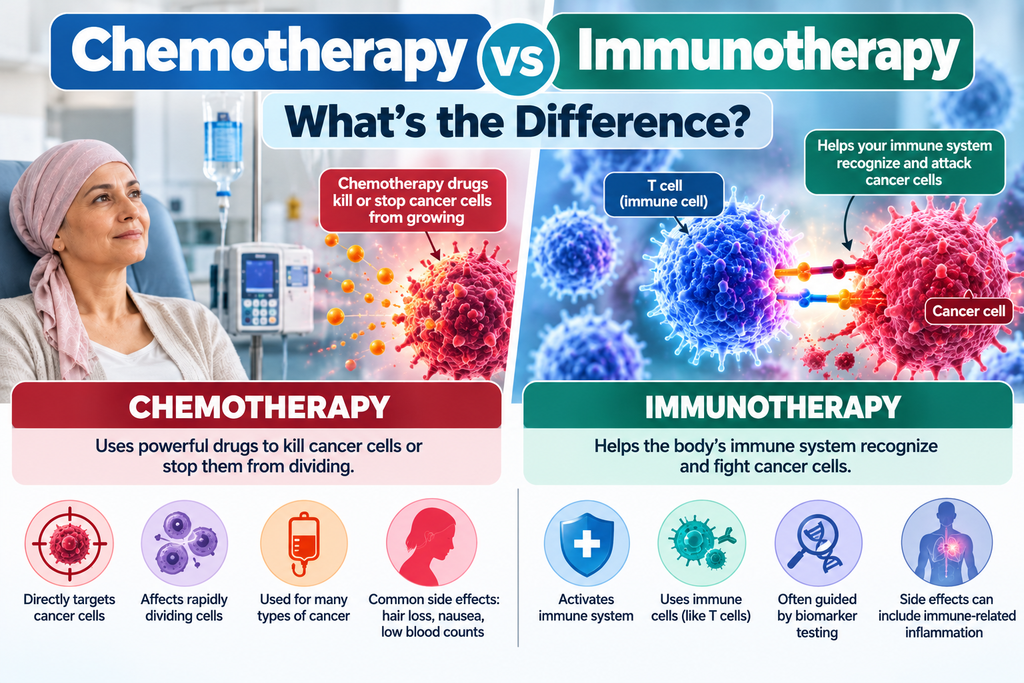
Chemotherapy and immunotherapy are both important cancer treatments, but they work in very different ways.
Chemotherapy uses medicines that directly kill cancer cells or stop them from growing, while immunotherapy helps the body’s immune system recognize and fight cancer.
In some cancers, doctors may use chemotherapy and immunotherapy together, rather than choosing only one.
So, which treatment is right for you?
There is no universal answer. The decision depends on the type and stage of cancer, tumor characteristics, biomarkers, previous treatments, overall health, and treatment goals.
What Is Chemotherapy?
Chemotherapy, often called “chemo,” is a cancer treatment that uses drugs to kill cancer cells or stop them from growing.
Cancer cells often divide rapidly. Many chemotherapy medicines target rapidly dividing cells, which can slow or destroy cancer growth.
Chemotherapy can be used:
- Before surgery to shrink a tumor
- After surgery to destroy remaining cancer cells
- Together with radiation therapy
- To treat cancer that has spread
- To reduce symptoms caused by cancer
- To control cancer growth
Chemotherapy is used for many different types of cancer.
What Is Immunotherapy?
Immunotherapy is a type of cancer treatment that helps the immune system fight cancer.
Cancer cells can sometimes avoid being recognized or attacked by the immune system. Some immunotherapies help overcome these mechanisms.
One widely used type is an immune checkpoint inhibitor, which blocks certain immune “brakes” and can allow immune cells to attack cancer cells more effectively.
Other forms of immunotherapy include:
- Immune checkpoint inhibitors
- T-cell transfer therapies
- Monoclonal antibodies
- Treatment vaccines
- Immune-system modulators
The specific type used depends on the cancer and treatment plan.
Chemotherapy vs Immunotherapy: The Basic Difference
The easiest way to understand the difference is to look at how each treatment fights cancer.
| Feature | Chemotherapy | Immunotherapy |
|---|---|---|
| Main approach | Directly kills or stops the growth of cancer cells | Helps the immune system attack cancer |
| Primary target | Rapidly dividing cells | Immune pathways or cancer-specific targets |
| Effect on immune system | Some chemotherapy can suppress immune cells | Activates or modifies immune responses |
| Treatment response | Depends on cancer type and chemotherapy drugs | Depends partly on tumor biology and immune response |
| Side effects | Can affect healthy rapidly dividing cells | Can cause immune-related inflammation |
| Biomarker testing | May or may not be needed depending on cancer | Often important for certain immunotherapies |
| Can they be combined? | Yes | Yes |
Neither treatment is automatically better than the other. Doctors choose treatment based on the patient’s specific cancer.
How Does Chemotherapy Work?
Chemotherapy can affect cancer cells in several ways.
Many chemotherapy drugs interfere with processes that cancer cells need to grow and divide.
Because some healthy cells also divide rapidly, chemotherapy can affect them as well.
This helps explain common chemotherapy side effects such as:
- Hair loss
- Nausea
- Mouth sores
- Fatigue
- Changes in blood counts
- Increased risk of infection
Not every chemotherapy drug causes the same side effects, and not every patient experiences the same effects.
How Does Immunotherapy Work?
Your immune system is designed to recognize and eliminate abnormal cells.
However, cancer can develop ways to avoid immune attack.
For example, some cancer cells can interact with immune checkpoint pathways that reduce T-cell activity.
Checkpoint inhibitor medicines can block these pathways and help restore the immune response against cancer cells.
In simple terms:
Chemotherapy:
Cancer cells → medicine directly damages/kills them
Immunotherapy:
Cancer cells → immune system is activated or redirected → immune cells attack cancer
Which Cancers Can Be Treated With Chemotherapy?
Chemotherapy is used for many types of cancer, including selected cases of:
- Breast cancer
- Lung cancer
- Colorectal cancer
- Ovarian cancer
- Lymphoma
- Leukemia
- Pancreatic cancer
- Stomach cancer
- Testicular cancer
- Many other cancers
The specific chemotherapy drugs and combinations depend on the diagnosis.
Chemotherapy may be used alone, but it is often combined with surgery, radiation, targeted therapy, or other treatments.
Which Cancers Can Be Treated With Immunotherapy?
Immunotherapy is used for selected patients with several types of cancer.
Depending on the specific medicine, immunotherapy may be used for cancers including:
- Lung cancer
- Melanoma
- Kidney cancer
- Bladder cancer
- Head and neck cancers
- Liver cancer
- Colorectal cancer
- Stomach cancer
- Certain breast cancers
- Certain blood cancers
- Other selected cancers
However, having one of these cancer types does not automatically mean immunotherapy will be appropriate.
The cancer’s biological characteristics and other clinical factors are important.
Why Are Biomarker Tests Important for Immunotherapy?
One major difference between chemotherapy and some forms of immunotherapy is the role of biomarker testing.
Biomarkers are measurable characteristics of a tumor that may provide information about how it behaves or how it might respond to a particular treatment.
Depending on the cancer, doctors may evaluate biomarkers such as:
- PD-L1
- MSI
- MMR
- Tumor mutational burden
- Specific genetic changes
These tests can help doctors determine whether certain immunotherapies may be appropriate.
However, a biomarker result does not always guarantee that a treatment will work.
What Are the Side Effects of Chemotherapy?
Because chemotherapy can affect healthy cells that divide rapidly, it can cause side effects.
Common effects can include:
- Hair loss
- Nausea and vomiting
- Fatigue
- Mouth sores
- Reduced blood cell counts
- Increased infection risk
- Appetite changes
- Diarrhea or constipation
The type and severity of side effects depend on the specific medicine, dose, treatment schedule, and individual patient.
Many chemotherapy-related side effects improve after treatment ends, although some can last longer.
What Are the Side Effects of Immunotherapy?
Immunotherapy has a different pattern of side effects.
Because the treatment activates or modifies the immune system, immune cells can sometimes attack healthy tissues.
Possible side effects include:
- Skin rash
- Itching
- Fatigue
- Diarrhea
- Fever
- Joint or muscle pain
- Thyroid problems
- Liver inflammation
- Lung inflammation
- Colon inflammation
In rare cases, serious inflammation can affect organs such as the heart, kidneys, lungs, liver, or nervous system.
Some immune-related side effects can occur during treatment or even after treatment, so patients should report new or unusual symptoms to their healthcare team.
Is Immunotherapy Safer Than Chemotherapy?
It is not accurate to say that immunotherapy is simply “safer” than chemotherapy.
The two treatments have different mechanisms and different patterns of side effects.
Chemotherapy commonly affects rapidly dividing healthy cells, while immunotherapy can cause immune-related inflammation in healthy organs.
The risks depend on:
- Cancer type
- Treatment type
- Dose
- Combination of treatments
- Patient’s overall health
- Previous treatments
Your oncology team can explain the specific risks associated with your treatment plan.
Can Chemotherapy and Immunotherapy Be Given Together?
Yes.
In some cancers, chemotherapy and immunotherapy are intentionally combined.
This approach is sometimes called chemoimmunotherapy.
The goal is to use the different mechanisms of the treatments together.
For example, depending on the cancer, chemotherapy may be combined with an immune checkpoint inhibitor.
Whether this combination is appropriate depends on the specific cancer and treatment guidelines.
Which Treatment Works Faster?
There is no universal answer.
The speed of response depends on:
- Cancer type
- Disease stage
- Tumor characteristics
- Treatment regimen
- Individual response
Chemotherapy can produce relatively rapid tumor shrinkage in cancers that are sensitive to the drugs.
Immunotherapy responses can vary, and some patients experience durable responses.
Doctors use imaging, physical examinations, laboratory tests, and other assessments to determine whether treatment is working.
Which Treatment Is Better for Stage 4 Cancer?
Stage 4 cancer means the cancer has spread to distant parts of the body in many solid cancers.
But Stage 4 cancer is not one single disease.
Treatment depends on the original cancer, where it has spread, biomarkers, previous treatments, and overall health.
Depending on the cancer, treatment may include:
- Chemotherapy
- Immunotherapy
- Targeted therapy
- Hormone therapy
- Radiation
- Surgery in selected situations
- Combinations of treatments
Therefore, chemotherapy cannot automatically be considered better than immunotherapy—or vice versa—based only on the cancer being Stage 4.
What Determines Which Treatment You Receive?
Your oncologist may consider several factors.
1. Cancer Type
Different cancers respond differently to treatments.
2. Cancer Stage
The extent of cancer spread influences treatment planning.
3. Tumor Biology
Genetic and molecular characteristics can influence which treatments may work.
4. Biomarker Results
Certain biomarkers may help identify patients who could benefit from specific immunotherapies or targeted therapies.
5. Previous Treatment
Previous chemotherapy, radiation, surgery, immunotherapy, or targeted treatment can affect future choices.
6. Overall Health
Other medical conditions and your general health can influence treatment selection.
7. Treatment Goals
Treatment may aim to cure cancer, reduce the risk of recurrence, control advanced cancer, relieve symptoms, or improve quality of life.
Can Immunotherapy Cure Cancer?
Immunotherapy can produce significant and sometimes long-lasting responses in some cancers and some patients.
However, immunotherapy does not cure every cancer.
Its effectiveness depends on cancer type, tumor biology, biomarkers, treatment regimen, and individual response.
Some patients may respond for a long period, while others may not respond or may eventually develop resistance.
Can Chemotherapy Cure Cancer?
Chemotherapy can contribute to curing certain cancers and can also be used to reduce recurrence risk, control cancer, or relieve symptoms.
Whether chemotherapy can be curative depends on the cancer type, stage, treatment regimen, and individual circumstances.
Can Cancer Become Resistant to Treatment?
Yes.
Cancer cells can develop or already possess characteristics that make them resistant to a particular treatment.
If cancer progresses during treatment, the oncology team may reassess the diagnosis, perform additional testing when appropriate, and consider another treatment strategy.
Possible options can include:
- Changing chemotherapy
- Switching targeted therapy
- Changing immunotherapy
- Combining treatments
- Radiation therapy
- Surgery in selected cases
- Clinical trials
What Questions Should You Ask Your Oncologist?
If chemotherapy or immunotherapy has been recommended, consider asking:
- What type and stage of cancer do I have?
- Why are you recommending this treatment?
- Is chemotherapy, immunotherapy, or both appropriate for me?
- Do I need biomarker testing?
- What are the expected benefits?
- What side effects should I watch for?
- How will we know whether treatment is working?
- How long will treatment continue?
- Are there alternative treatment options?
- Are clinical trials appropriate for me?
These questions can help you understand the reasoning behind your treatment plan.
Chemotherapy vs Immunotherapy: Key Takeaway
Chemotherapy and immunotherapy are different types of cancer treatment.
Chemotherapy primarily works by killing cancer cells or stopping their growth, while immunotherapy works by helping the immune system recognize and fight cancer.
Both treatments can be valuable, and in some cancers they are used together.
The right treatment is determined by the cancer type, stage, biomarkers, tumor characteristics, previous treatment, overall health, and treatment goals.
If you have been diagnosed with cancer, speak with your oncologist about why a particular treatment has been recommended rather than comparing treatments based only on their names or side effects.
Frequently Asked Questions
Is chemotherapy the same as immunotherapy?
No. Chemotherapy directly targets cancer cells and rapidly dividing cells, while immunotherapy helps the immune system fight cancer.
Is immunotherapy better than chemotherapy?
Neither is universally better. The appropriate treatment depends on the individual cancer and patient.
Does immunotherapy have fewer side effects than chemotherapy?
Not necessarily. The two treatments cause different types of side effects. Immunotherapy can cause immune-related inflammation that may affect organs.
Can chemotherapy and immunotherapy be used together?
Yes. Some cancer treatment plans intentionally combine chemotherapy and immunotherapy.
Does everyone with cancer need chemotherapy?
No. Treatment depends on the cancer type, stage, tumor characteristics, and individual circumstances.
Does everyone with cancer qualify for immunotherapy?
No. Immunotherapy is appropriate only for selected cancers and patients. Biomarker testing may help determine whether certain immunotherapies are suitable.
How long does chemotherapy take?
Treatment schedules vary widely. Some chemotherapy regimens are given weekly, while others follow longer cycles. The schedule depends on the cancer and specific drugs.
How long does immunotherapy take?
The schedule varies by medicine and cancer. Some immunotherapies are given intravenously at intervals determined by the treatment regimen.
Medical Disclaimer:
This article is for general educational purposes only and does not replace professional medical advice, diagnosis, or treatment. Cancer treatment decisions should be made with a qualified oncology team based on the individual’s diagnosis, test results, treatment goals, and overall health.