
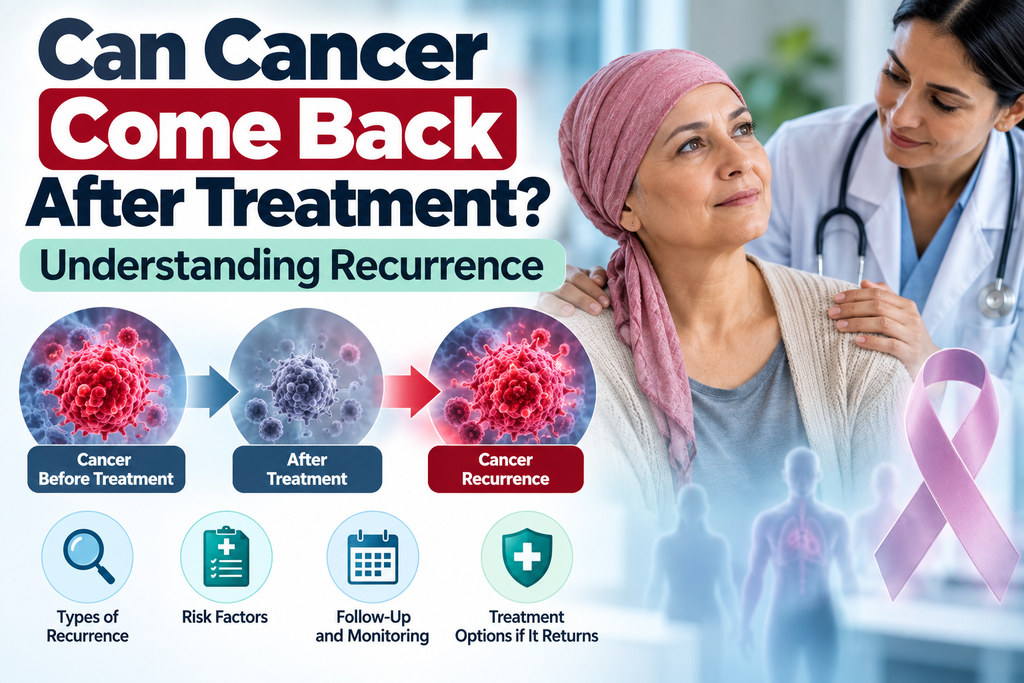
Finishing cancer treatment can bring relief, but many patients and families have another question:
“Can cancer come back after treatment?”
Yes, cancer can sometimes return after treatment. This is called cancer recurrence. However, recurrence does not happen to everyone, and the risk varies considerably depending on the type and stage of cancer, tumor characteristics, treatment received, and other individual factors.
Understanding how cancer recurrence happens, what signs to watch for, and how doctors monitor patients after treatment can help reduce uncertainty and support informed follow-up care.
What Is Cancer Recurrence?
Cancer recurrence means that cancer returns after a period when it could no longer be detected or after treatment had successfully reduced the cancer.
Cancer can recur in the same area where it originally developed or in another part of the body.
There are three commonly described types of recurrence:
1. Local Recurrence
Cancer returns at or near the original site.
For example, if a tumor was originally removed from the colon and cancer later develops in the same region, it may be considered a local recurrence.
2. Regional Recurrence
Cancer returns in nearby lymph nodes or tissues close to the original tumor.
3. Distant Recurrence
Cancer returns in a distant part of the body.
This is also known as metastatic recurrence.
For example, breast cancer may recur in the bones, liver, lungs, or brain. The cancer is still considered breast cancer because it originated in the breast.
Why Can Cancer Come Back After Treatment?
Cancer treatment aims to remove or destroy cancer cells, but in some situations, a small number of cancer cells may remain in the body.
These cells may be too small to detect using available tests.
Over time, surviving cancer cells can multiply and eventually become detectable again.
This is one reason doctors continue to monitor patients even after treatment has been completed.
Importantly, recurrence is not necessarily caused by something the patient did or failed to do. Cancer biology is complex, and recurrence can occur despite appropriate treatment.
Does Recurrence Mean the First Treatment Failed?
Not necessarily.
Cancer treatment can successfully eliminate all detectable cancer while microscopic cancer cells remain undetectable.
A recurrence can happen months or years after treatment.
The risk of recurrence also varies significantly between different cancers.
Some cancers have a higher likelihood of returning than others, while certain cancers may have a relatively low recurrence risk after successful treatment.
When Is Cancer Most Likely to Come Back?
There is no single timeframe that applies to every cancer.
Some recurrences occur relatively soon after treatment, while others can occur many years later.
The timing depends on factors such as:
- Cancer type
- Stage at diagnosis
- Tumor characteristics
- Lymph node involvement
- Tumor grade
- Molecular or genetic features
- Treatment received
- Response to treatment
Your oncology team can explain the recurrence pattern associated with your specific cancer.
What Are the Symptoms of Cancer Recurrence?
Symptoms depend on where the cancer returns.
Possible warning signs can include:
- A new lump or swelling
- Persistent unexplained pain
- Unexplained weight loss
- Persistent fatigue
- Changes in bowel or bladder habits
- Persistent cough or breathing difficulties
- Unexplained bleeding
- Persistent headaches or neurological changes
- Changes in appetite
- New or worsening symptoms at the original cancer site
However, these symptoms do not automatically mean cancer has returned.
Many of these symptoms can also be caused by infections, medications, treatment side effects, or other medical conditions.
If you develop a persistent or unusual symptom after cancer treatment, discuss it with your healthcare team.
How Do Doctors Check for Cancer Recurrence?
Follow-up care depends on the type of cancer and treatment.
Doctors may use:
Physical Examination
Your doctor may look for changes around the original cancer site, lymph nodes, or other areas.
Blood Tests
Certain blood tests may be used to monitor general health or specific tumor markers when appropriate.
However, tumor markers are not suitable for monitoring every type of cancer.
Imaging
Depending on the cancer, follow-up may include:
- CT scans
- MRI
- PET scans
- Ultrasound
- Mammography
- X-rays
- Other specialized imaging
Biopsy
If a scan or examination identifies a suspicious area, a biopsy may be needed to determine whether cancer has returned.
What Is Cancer Remission?
Remission means that signs and symptoms of cancer have decreased or disappeared.
A complete remission means that no detectable evidence of cancer is found using available tests.
However, complete remission does not always mean that every cancer cell has been permanently eliminated.
This is why continued follow-up may be recommended even after successful treatment.
Can Cancer Recurrence Be Prevented?
Unfortunately, there is no guaranteed way to prevent cancer from returning.
However, following the recommended treatment and follow-up plan is important.
Depending on the cancer, doctors may recommend additional treatment after the primary treatment to reduce the risk of recurrence.
This can include:
- Hormone therapy
- Chemotherapy
- Radiation therapy
- Targeted therapy
- Immunotherapy
These treatments are sometimes called adjuvant therapy when they are given after the main treatment to reduce the chance of cancer returning.
Does Lifestyle Affect Cancer Recurrence?
Healthy lifestyle habits are important for overall health after cancer treatment.
Depending on your individual situation, your healthcare team may recommend:
- Maintaining a healthy weight
- Regular physical activity
- Eating a balanced diet
- Avoiding tobacco
- Limiting alcohol
- Getting adequate sleep
- Attending recommended follow-up appointments
However, healthy lifestyle choices cannot guarantee that cancer will not return.
They should complement—not replace—medical follow-up and cancer treatment.
What Is the Difference Between Recurrence and a New Cancer?
This distinction is important.
Cancer Recurrence
The original cancer returns.
Second Primary Cancer
A completely new cancer develops in another part of the body.
For example, a person previously treated for breast cancer may later develop a completely new lung cancer. That would be considered a second primary cancer rather than a recurrence of breast cancer.
Doctors use pathology and other tests to determine which situation is present.
Can Recurrent Cancer Be Treated?
Yes.
Treatment for recurrent cancer depends on:
- Where the cancer returned
- Type of original cancer
- Time since the first treatment
- Previous treatments
- Molecular characteristics
- Overall health
- Whether the recurrence is local, regional, or distant
Treatment options may include:
- Surgery
- Radiation therapy
- Chemotherapy
- Targeted therapy
- Immunotherapy
- Hormone therapy
- Clinical trials
- Combination treatments
For some local recurrences, surgery or radiation may be possible.
For metastatic recurrence, systemic treatments such as chemotherapy, targeted therapy, hormone therapy, or immunotherapy may be considered depending on the cancer.
What Happens If Cancer Comes Back in Another Organ?
When cancer spreads to another part of the body, it is called metastatic cancer.
For example, if colon cancer spreads to the liver, the cancer is still colorectal cancer.
Doctors may use imaging, biopsy, and biomarker testing to understand the recurrence and determine appropriate treatment.
The treatment plan depends on the original cancer and the characteristics of the recurrent disease.
Why Is Biomarker Testing Important in Recurrence?
Cancer can change over time.
A recurrent tumor may have different molecular characteristics from the original tumor.
In selected situations, doctors may recommend testing the recurrent cancer for biomarkers or genetic changes.
This information can sometimes help identify treatments such as:
- Targeted therapy
- Immunotherapy
- Hormone therapy
- Other personalized treatments
The appropriate tests depend on the cancer type.
How Often Should Cancer Survivors Have Follow-Up?
There is no universal follow-up schedule.
Your follow-up plan depends on:
- Cancer type
- Stage
- Treatment
- Risk of recurrence
- Time since treatment
- Overall health
Some patients may have regular examinations and imaging, while others may require different monitoring.
It is important to follow the schedule recommended by your oncology team.
What Should You Do If You Are Worried About Recurrence?
Fear of recurrence is common among cancer survivors.
If you notice a new or persistent symptom, do not automatically assume that the cancer has returned—but do not ignore it either.
Contact your healthcare team and explain:
- What symptom you noticed
- When it started
- Whether it is getting worse
- Whether anything makes it better or worse
- Any other changes you have experienced
Your doctor can determine whether further evaluation is necessary.
Questions to Ask Your Oncologist
After completing cancer treatment, consider asking:
- What is my risk of recurrence?
- What symptoms should I watch for?
- How often should I have follow-up appointments?
- Do I need regular imaging?
- Do I need blood tests or tumor-marker testing?
- What lifestyle changes should I consider?
- Are there long-term side effects I should monitor?
- What should I do if I notice a new symptom?
- If the cancer returns, what treatment options may be available?
- Do I need additional biomarker testing?
The Bottom Line
Yes, cancer can come back after treatment, but recurrence does not happen to everyone.
Cancer recurrence occurs when cancer returns after a period when it was undetectable or controlled. It can be local, regional, or distant.
The risk and timing of recurrence depend on the type and stage of cancer, tumor biology, treatment, and individual patient factors.
Regular follow-up, awareness of new symptoms, and communication with your healthcare team are important parts of cancer survivorship.
If you have completed cancer treatment and are concerned about a possible recurrence, speak with your oncologist rather than relying on symptoms or internet information alone.
Frequently Asked Questions
Can cancer come back after successful treatment?
Yes. Cancer can sometimes recur even after successful treatment and a period of remission. However, recurrence does not happen to every patient.
How long after treatment can cancer come back?
There is no fixed timeframe. Recurrence can occur months or years after treatment, depending on the cancer type and individual risk factors.
Does cancer recurrence mean the cancer is incurable?
Not necessarily. Some local or regional recurrences can potentially be treated with surgery, radiation, or other therapies. Treatment depends on the specific circumstances.
Can a blood test detect cancer recurrence?
Some blood tests and tumor markers can be useful for selected cancers, but they cannot detect every recurrence. Doctors may combine blood tests with examinations, imaging, and sometimes biopsy.
Can cancer recurrence be prevented?
There is no guaranteed way to prevent recurrence. Following the recommended treatment and surveillance plan and maintaining healthy habits can support overall health.
What is the difference between recurrence and metastasis?
Recurrence means the original cancer has returned after treatment. Metastasis means cancer has spread to a distant part of the body. A recurrence can be local, regional, or metastatic.
What should I do if I notice a new symptom after cancer treatment?
Contact your healthcare team. A new symptom does not automatically mean cancer has returned, but persistent or unexplained symptoms should be evaluated.
Medical Disclaimer:
This article is for general educational purposes only and does not replace professional medical advice, diagnosis, or treatment. Cancer recurrence risk and follow-up recommendations vary significantly between individuals. Always discuss your specific situation with your oncology team.