

June is Cancer Immunotherapy Month
Cancer treatment has evolved significantly over the last decade, offering patients more personalized and effective treatment options than ever before. One of the most promising advancements in modern oncology is Immunotherapy, a treatment approach that harnesses the body’s own immune system to recognize, attack, and eliminate cancer cells.
As we observe Cancer Immunotherapy Month, it is important to spread awareness about this revolutionary treatment while addressing common misconceptions that often create confusion among patients and families.
What Is Cancer Immunotherapy?
Immunotherapy is a type of cancer treatment that strengthens or modifies the immune system to identify and destroy cancer cells more effectively. Unlike traditional treatments that directly target tumors, immunotherapy empowers the body’s natural defense mechanisms to fight cancer.
Today, immunotherapy has become an important treatment option for several cancers, including:
- Lung Cancer
- Melanoma
- Kidney Cancer
- Bladder Cancer
- Head and Neck Cancer
- Certain Gastrointestinal Cancers
- Some Blood Cancers
The field continues to expand as researchers discover new ways to use the immune system against cancer.
Cancer Immunotherapy: Myth vs Fact
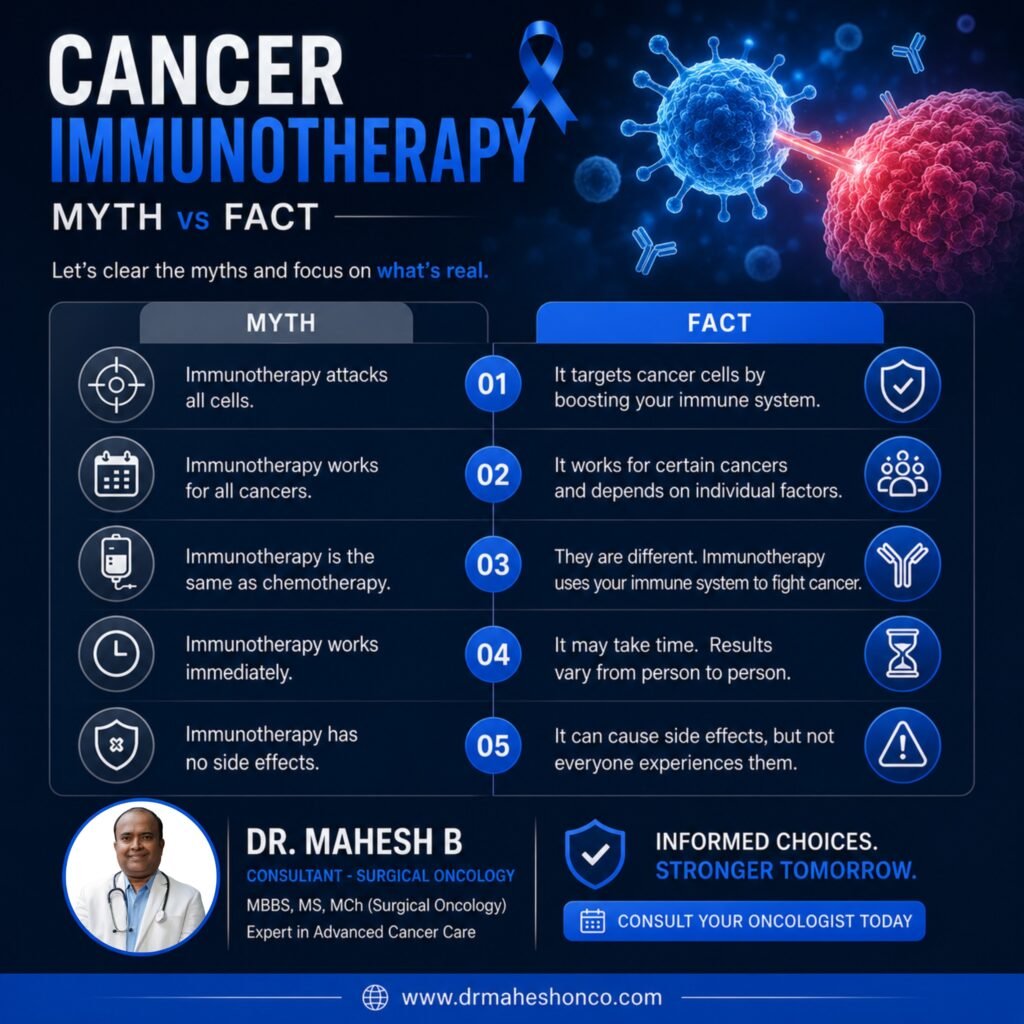
Many misconceptions prevent patients from fully understanding immunotherapy. Let’s separate the myths from the facts.
Myth 1: Immunotherapy Attacks All Cells
Fact:
Immunotherapy is designed to help the immune system specifically recognize and target cancer cells. While side effects can occur, the treatment generally aims to be more selective compared to many conventional therapies.
Myth 2: Immunotherapy Works for All Cancers
Fact:
Immunotherapy has shown remarkable results in several cancers, but it is not effective for every cancer type or every patient. The success of treatment depends on factors such as:
- Cancer type
- Stage of disease
- Tumor biomarkers
- Overall patient health
- Immune system response
This is why personalized evaluation by an oncology specialist is essential.
Myth 3: Immunotherapy Is the Same as Chemotherapy
Fact:
Immunotherapy and chemotherapy are completely different treatment approaches.
Chemotherapy:
- Directly attacks rapidly dividing cells
- Can affect healthy cells along with cancer cells
- Often causes hair loss and other systemic side effects
Immunotherapy:
- Activates or enhances the immune system
- Helps immune cells recognize cancer
- Has a different side-effect profile
- May produce long-lasting responses in selected patients
In many cases, immunotherapy may be combined with chemotherapy or other treatments for optimal outcomes.
Myth 4: Immunotherapy Works Immediately
Fact:
Immunotherapy often requires time for the immune system to mount an effective response against cancer cells.
Some patients may notice improvement within weeks, while others may require several months before significant treatment benefits become apparent. Regular follow-up and monitoring are therefore important.
Myth 5: Immunotherapy Has No Side Effects
Fact:
Although immunotherapy is generally well tolerated, it can still cause side effects because it stimulates the immune system.
Potential side effects may include:
- Fatigue
- Skin rashes
- Fever
- Diarrhea
- Thyroid dysfunction
- Inflammation of organs in rare cases
Most side effects can be effectively managed when identified early by an experienced oncology team.
The Power of Immunotherapy
Cancer immunotherapy has transformed the treatment landscape by offering benefits that extend beyond traditional approaches.
1. Targets Cancer While Preserving Healthy Tissue
Unlike many conventional therapies, immunotherapy helps the immune system distinguish cancer cells from normal cells, reducing unnecessary damage to healthy tissues.
2. Boosts the Body’s Natural Defense System
The treatment strengthens immune responses, enabling immune cells to recognize and attack cancer more effectively.
3. Personalized Cancer Care
Modern immunotherapy is increasingly tailored to the unique characteristics of each patient’s cancer, allowing for more individualized treatment strategies.
4. Improved Long-Term Outcomes
Many patients have experienced durable responses and extended survival benefits, making immunotherapy one of the most exciting developments in oncology.
5. Hope for the Future
Research in cancer immunotherapy continues to advance rapidly. New treatment combinations, biomarkers, and cellular therapies are opening doors to even better outcomes for cancer patients worldwide.
Who May Be Eligible for Immunotherapy?
Not every patient is a candidate for immunotherapy. Eligibility depends on several factors, including:
- Type of cancer
- Stage of disease
- Molecular and genetic testing results
- Previous treatments received
- Overall health condition
A comprehensive oncology evaluation can determine whether immunotherapy may be beneficial.
The Future of Cancer Treatment
The future of oncology is increasingly focused on precision medicine, where treatments are customized according to the biology of each patient’s cancer. Immunotherapy represents a major step toward this goal.
As ongoing clinical research continues to expand treatment possibilities, more patients are gaining access to therapies that were unimaginable just a few years ago.
Cancer immunotherapy is not merely another treatment option—it represents a fundamental shift in how we fight cancer, offering renewed hope and improved outcomes for patients and families worldwide.
Consult Dr. Mahesh B for Advanced Cancer Care
Dr. Mahesh B
Consultant Surgical Oncologist
MBBS, MS, MCh (Surgical Oncology)
With expertise in advanced cancer treatment and personalized oncology care, Dr. Mahesh B is committed to providing evidence-based, patient-centered cancer management using the latest treatment modalities, including immunotherapy.