
Introduction
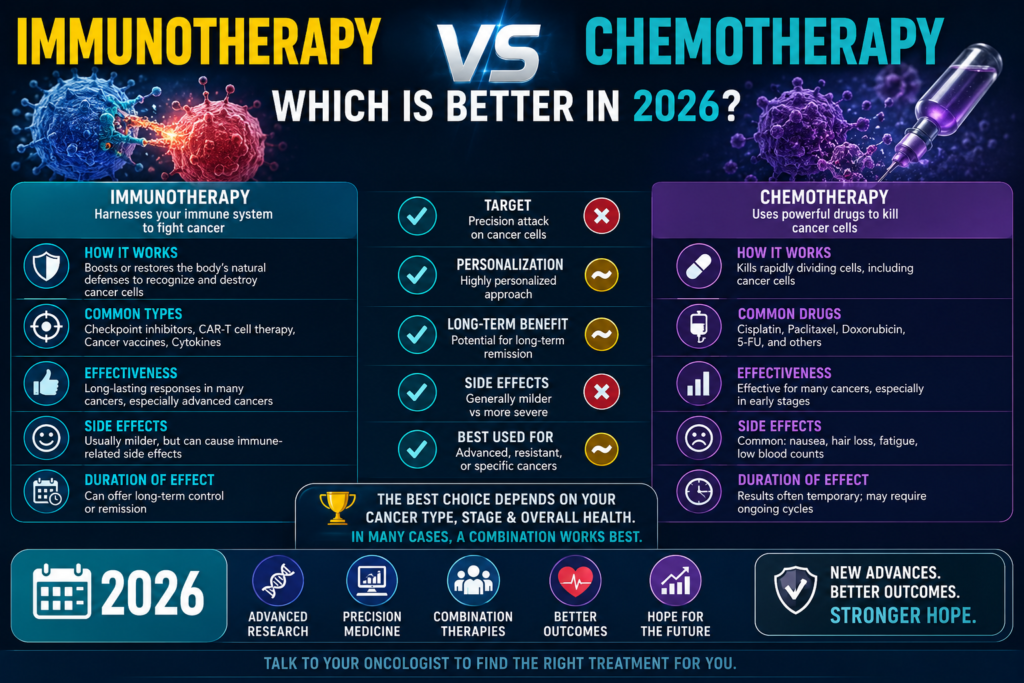
When diagnosed with cancer, one of the most common and important questions patients ask is whether they should choose immunotherapy or chemotherapy. With major advancements in oncology in 2025, treatment options have become more advanced and personalized.
Chemotherapy has been used for decades and remains a powerful treatment. However, immunotherapy is now transforming cancer care by improving survival rates and offering fewer side effects in selected patients. The decision is no longer about choosing one over the other, but understanding which treatment is best suited for each individual.
What is Chemotherapy?
Chemotherapy is a traditional cancer treatment that uses strong drugs to kill rapidly dividing cancer cells. It works by stopping cancer cells from growing and multiplying.
However, chemotherapy also affects healthy cells, especially those that grow quickly such as hair follicles and bone marrow. This is why patients often experience side effects like hair loss and fatigue.
What is Immunotherapy?
Immunotherapy is a modern cancer treatment that helps the body’s immune system recognize and fight cancer cells more effectively. Instead of directly killing cancer cells, it boosts the body’s natural defenses.
This treatment includes methods like checkpoint inhibitors, CAR-T cell therapy, and cancer vaccines. Immunotherapy is more targeted compared to chemotherapy.
Key Differences Between Immunotherapy and Chemotherapy
Chemotherapy directly kills cancer cells, while immunotherapy strengthens the immune system to fight cancer. Chemotherapy affects both cancerous and healthy cells, whereas immunotherapy is more selective. Chemotherapy typically has immediate and widespread side effects, while immunotherapy side effects are often fewer but may involve immune-related reactions. Chemotherapy is generally more affordable, while immunotherapy can be expensive.
Effectiveness and Survival Rates in 2025
Chemotherapy remains effective for many cancers and works quickly to reduce tumor size. It is still widely used in early-stage cancers and situations where rapid control is needed.
Immunotherapy has shown improved long-term survival in several cancers. Some patients experience long-lasting remission, especially in cancers like melanoma and lung cancer.
Recent research shows that combining chemotherapy and immunotherapy provides better outcomes than using either alone. This combination approach is becoming a standard treatment in many cancers.
Side Effects Comparison
Chemotherapy side effects include hair loss, nausea, vomiting, fatigue, and reduced immunity. These effects occur because chemotherapy impacts healthy cells along with cancer cells.
Immunotherapy side effects are different. They may include fatigue, skin reactions, and in some cases immune system overactivity, where the body attacks normal tissues. These effects are less common but can be serious if not monitored.
Advantages of Immunotherapy in 2025
Immunotherapy offers more targeted treatment and better quality of life for many patients. It can lead to long-term remission and has fewer general side effects compared to chemotherapy. It is also a key part of modern personalized cancer treatment.
Advantages of Chemotherapy
Chemotherapy is effective across a wide range of cancers and works quickly to shrink tumors. It is more accessible and affordable compared to newer treatments. It remains an essential part of cancer care, especially in early stages and aggressive cancers.
Limitations of Both Treatments
Immunotherapy does not work for all patients and requires specific biological markers to be effective. It is also expensive and not easily accessible everywhere.
Chemotherapy has significant side effects and may not provide long-term control in advanced cancers. It can also weaken the immune system.
Which Is Better in 2025?
The answer depends on several factors including the type of cancer, stage, genetic profile, and overall health of the patient.
In general, chemotherapy is still widely used in early-stage cancers, while immunotherapy is preferred in many advanced cancers. The most effective approach today is often a combination of both treatments.
Latest Innovations in 2025–2026
Modern cancer treatment now focuses on combining therapies for better results. Chemo-immunotherapy is widely used in cancers such as lung and breast cancer. CAR-T cell therapy is showing remarkable success in blood cancers. Personalized medicine allows treatments to be tailored based on genetic testing. In some cases, immunotherapy alone is enough to control cancer.
Lifestyle and Diet During Treatment
Patients should focus on a balanced diet rich in protein, fruits, and vegetables. Staying hydrated and maintaining light physical activity can help improve recovery.
It is important to avoid processed foods, alcohol, and smoking during treatment, as these can negatively impact outcomes.
When to See a Doctor
If you are diagnosed with cancer or experiencing symptoms, it is important to consult an oncologist immediately. Early diagnosis and proper treatment planning significantly improve outcomes.
Myths vs Facts
A common myth is that immunotherapy completely replaces chemotherapy. In reality, both treatments are often used together. Another myth is that chemotherapy is outdated, but it remains a critical part of cancer treatment.
FAQs
Immunotherapy can be better than chemotherapy in certain cancers, but not all. Many patients benefit from using both treatments together. Immunotherapy generally has fewer side effects, but they are different in nature. It is also more expensive than chemotherapy.
Conclusion
In 2025, the comparison between immunotherapy and chemotherapy is not about which is universally better, but about choosing the right treatment for each patient. Immunotherapy is changing cancer care with improved outcomes and quality of life, while chemotherapy continues to be a strong and reliable treatment.
The future of oncology lies in personalized treatment, where therapies are customized based on individual patient needs.