
Introduction
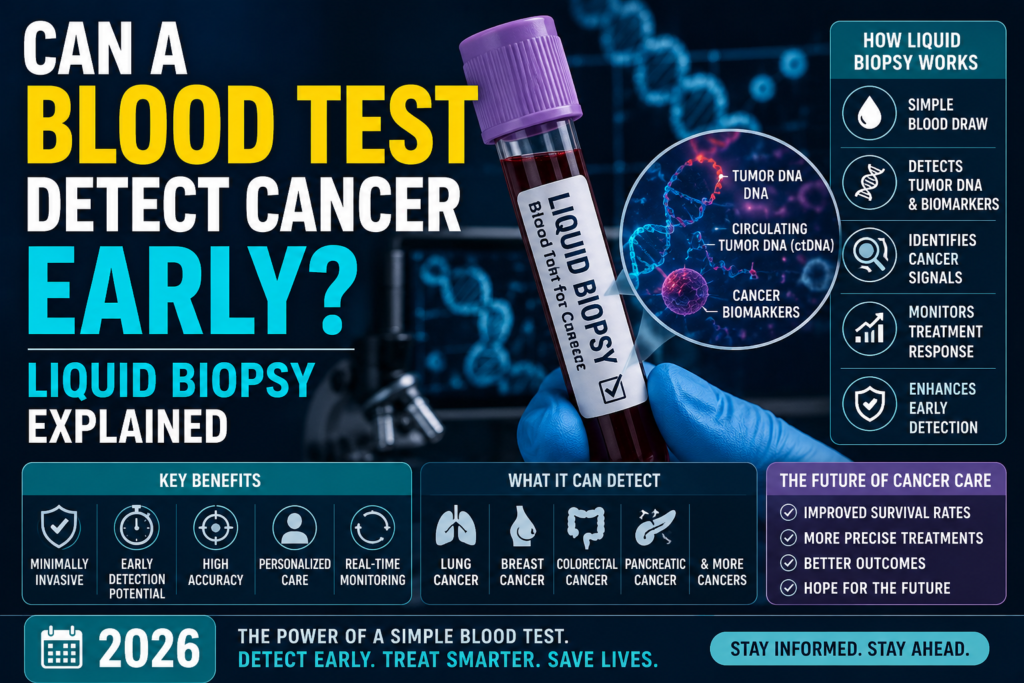
What if detecting cancer was as simple as taking a blood test? No pain, no invasive procedures, and no waiting for symptoms to appear. Thanks to modern medical advancements, this is becoming a reality through a technology called liquid biopsy.
In recent years, especially between 2024 and 2026, liquid biopsy has emerged as a revolutionary tool in early cancer detection. It allows doctors to identify cancer-related signals in the blood even before symptoms develop. This breakthrough is changing how cancer is diagnosed and managed.
In this article, we explain how liquid biopsy works, its accuracy, benefits, limitations, and whether it can truly detect cancer early.
What is a Liquid Biopsy?
A liquid biopsy is a simple blood test that detects cancer-related materials circulating in the bloodstream.
Instead of taking a tissue sample from a tumor, this test analyzes components such as circulating tumor DNA (ctDNA), circulating tumor cells (CTCs), and other biomarkers released by cancer cells.
It is a non-invasive, quick, and increasingly reliable method for detecting cancer.
How Can a Blood Test Detect Cancer Early?
Cancer cells release tiny fragments of DNA and other substances into the blood. Liquid biopsy detects these signals.
Advanced technologies, including artificial intelligence and next-generation sequencing, analyze these fragments to identify abnormal patterns associated with cancer.
This means cancer can sometimes be detected months or even years before symptoms appear.
Types of Cancers Detected by Liquid Biopsy
Liquid biopsy is being used or studied for early detection of multiple cancers, including colorectal cancer, lung cancer, breast cancer, prostate cancer, pancreatic cancer, and ovarian cancer.
Multi-cancer early detection tests are now being developed to identify several cancers using a single blood sample.
Latest Advancements in 2025–2026
Recent innovations have significantly improved the accuracy and application of liquid biopsy.
Multi-cancer early detection tests can now detect signals from multiple cancer types and even identify the likely origin of the cancer.
Artificial intelligence is enhancing pattern recognition, improving early-stage detection rates.
Ultra-sensitive sequencing technologies can detect very small amounts of tumor DNA, making early diagnosis more reliable.
Liquid biopsy is also being used to monitor treatment response and detect cancer recurrence earlier than traditional scans.
Accuracy of Liquid Biopsy
Liquid biopsy is highly promising but still evolving.
It shows high accuracy in detecting advanced cancers, but sensitivity for very early-stage cancers is still improving.
False positives and false negatives can occur, which means results must always be confirmed with additional diagnostic tests.
When combined with imaging and clinical evaluation, liquid biopsy significantly improves early detection.
Benefits of Liquid Biopsy
One of the biggest advantages is that it is non-invasive and does not require surgery or tissue removal.
It is quick and convenient, with minimal discomfort to the patient.
It can detect cancer earlier than traditional methods in some cases.
It allows repeated testing, which helps monitor treatment progress and detect recurrence.
It supports personalized medicine by identifying genetic mutations.
Limitations and Challenges
Despite its advantages, liquid biopsy has some limitations.
It may not detect very small tumors in early stages.
It is currently expensive and not widely available in all healthcare settings.
Positive results require confirmation through imaging or tissue biopsy.
There are also concerns related to standardization and data interpretation.
Symptoms Still Matter
Even with advanced blood tests, being aware of symptoms is essential.
Watch for warning signs such as unexplained weight loss, persistent fatigue, unusual lumps, blood in stool or urine, and long-lasting pain.
Early consultation with a doctor remains crucial.
Diagnosis Process
If a liquid biopsy indicates possible cancer, doctors may recommend further tests such as imaging scans like CT or MRI, endoscopy, or a tissue biopsy to confirm the diagnosis.
Liquid biopsy is best used as a screening and monitoring tool rather than a standalone diagnostic method.
Prevention Tips
While early detection is important, prevention is equally critical.
Maintain a healthy lifestyle, avoid smoking and alcohol, exercise regularly, and eat a balanced diet rich in fruits, vegetables, and fiber.
Regular health check-ups and screenings are recommended, especially for individuals with a family history of cancer.
Lifestyle and Diet Advice
Include antioxidant-rich foods, whole grains, lean proteins, and healthy fats in your diet.
Avoid processed foods, sugary drinks, and excessive red meat.
Support gut health through fiber and probiotics, as gut health plays a role in cancer prevention.
Ensure adequate sleep and stress management.
When to See a Doctor
Consult a doctor if you have persistent symptoms, a strong family history of cancer, or if you are interested in early screening options.
Early medical advice combined with advanced technologies like liquid biopsy can significantly improve outcomes.
Myths vs Facts
A common myth is that a blood test alone can fully diagnose cancer. In reality, liquid biopsy is a powerful screening tool but requires confirmation.
Another myth is that it replaces traditional biopsy. In fact, tissue biopsy is still the gold standard for diagnosis.
FAQs
Can a blood test really detect cancer early? Yes, liquid biopsy can detect cancer-related signals early, sometimes before symptoms appear.
Is liquid biopsy available in India? Yes, but it is mainly available in advanced hospitals and diagnostic centers.
Is it 100 percent accurate? No, it is highly promising but not perfect and should be combined with other tests.
Who should consider liquid biopsy? Individuals with high risk, family history, or those seeking advanced screening options.
Conclusion
Liquid biopsy is revolutionizing cancer detection by making it possible to identify cancer through a simple blood test. While it is not yet a complete replacement for traditional diagnostic methods, it offers a powerful tool for early detection, monitoring, and personalized treatment.
As technology advances, liquid biopsy is expected to become a standard part of preventive healthcare, helping detect cancer earlier and improve survival rates.